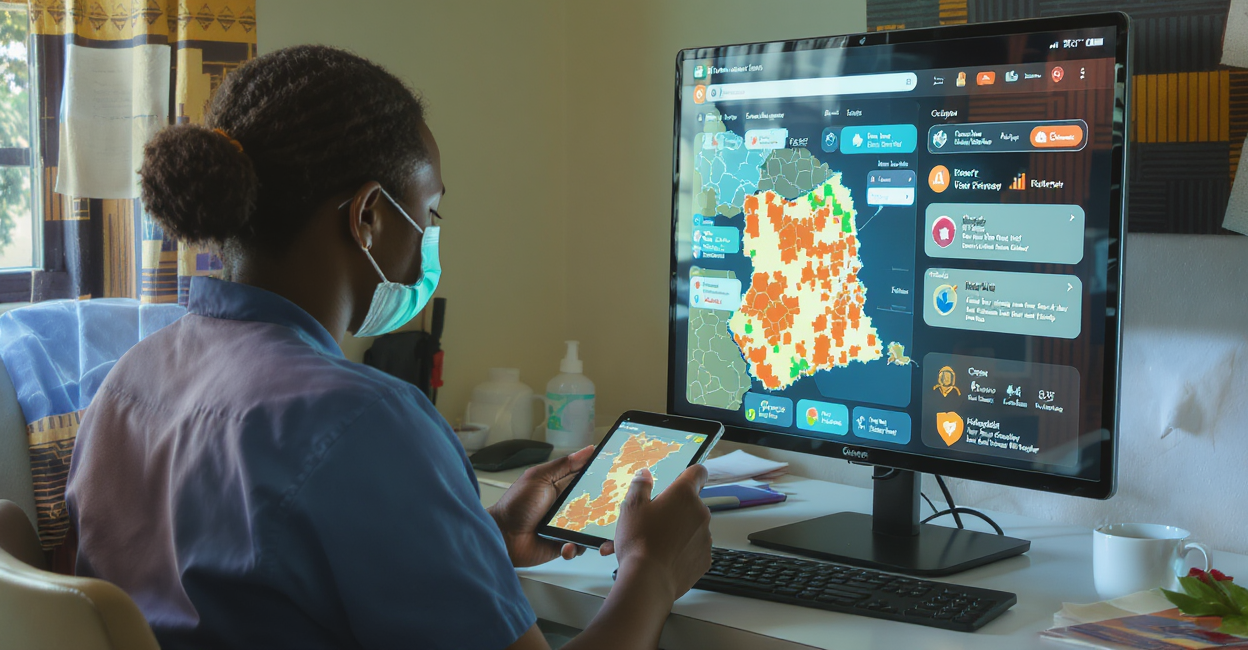
Predictive Analytics for Disease Surveillance in Ghana
Disease surveillance is one of the strongest foundations of public health. In Ghana, health facilities and CHPS zones generate large amounts of routine data every day. Traditionally, these data are reviewed after outbreaks occur. Predictive analytics changes this approach by helping health teams see patterns early, estimate future risks, and act before cases increase.
Ghana’s surveillance system brings together reports from CHPS compounds, health centres, district hospitals, regional hospitals, and laboratories. When these diverse data streams are analysed with modern statistical models and machine learning methods, they reveal signals that simple tables cannot show. Patterns in seasonality, climate, travel, population movement, and environmental conditions can all help forecast where disease burden may rise next.
National and regional programmes benefit greatly from this proactive approach. Predictive analytics helps identify districts that may experience increases in malaria, cholera, meningitis, diarrhoea, or other priority conditions. Health managers can then reposition medicines, rapid diagnostic tests, vaccines, and logistics before there is pressure on the system. Community engagement and risk communication activities can also be intensified in areas with rising predicted risk.
Regional variation in inpatient service availability
The map provided shows how inpatient services are distributed across Ghana. Each region is shaded based on the percentage of health facilities that offer inpatient care. Darker shades represent regions where inpatient availability is higher, while lighter shades represent areas where fewer facilities provide such services.
Ashanti, Greater Accra, Ahafo, Bono East, Western, and Central Region show some of the highest concentrations of inpatient capacity. These areas have between nineteen and twenty three percent of facilities offering inpatient services. This reflects stronger infrastructure, larger hospitals, and higher population density.
Regions such as Upper West, Bono, Northern, Eastern, Volta, Oti, and Savannah have lower percentages, often between one and twelve percent. These regions rely more on outpatient and primary level care, with fewer hospitals that can provide admission and overnight care.
This uneven distribution is important for disease prediction. Areas with fewer inpatient facilities must rely heavily on early detection and fast community response because severe cases may require referral to facilities that are far away. Predictive analytics helps these districts plan ahead, reduce delays in referral, and strengthen CHPS based surveillance during high risk periods.
Strengthening CHPS and community level response
Predictive analytics becomes even more powerful when combined with CHPS home visit data. Community health nurses and community health officers are often the first to see changes in fever patterns, sanitation issues, and early community complaints. When these observations are linked with national predictive models, health workers can receive simple alerts that guide:
• which communities to prioritise
• which households to follow up
• when to intensify health education
• when to prepare for possible referral needs
This supports a smarter, more targeted approach to community health and improves the quality of home visits.
Supporting national planning and universal health coverage
At national level, predictive dashboards provide a single view of risk across all regions. By combining routine surveillance data with climate patterns, environmental indicators, and previous outbreak history, the Ministry of Health and Ghana Health Service can plan for seasonal outbreaks, strengthen emergency preparedness, and optimise allocation of staff and supplies.
Predictive analytics therefore fits directly into Ghana’s journey toward universal health coverage. It improves early detection, enhances decision making, reduces emergency pressure on facilities, and supports strategic use of limited resources.
Conclusion
Predictive analytics is one of the most important digital health tools available today. By transforming daily health data into foresight, Ghana can move from reacting to health emergencies to preventing them. With continuous investment in data quality, digital tools, training, and community engagement, predictive analytics will play a central role in protecting lives and building a more resilient health system